•  
Iraqi Deminer Loses Legs Clearing Mines - Iraq

Iraqi Deminer Loses Legs Clearing Mines - Iraq

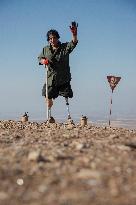
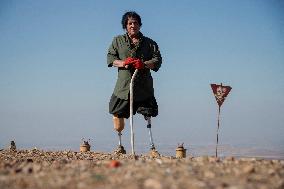
Hoshyar Ali stands among landmines and a warning sign in Halabja, Iraq, on November 20, 2025. He has been clearing landmines for over four decades, a task he began after the Iran-Iraq war when thousands of mines were planted along the border. Despite losing both legs and several family members to explosions, he continues to volunteer in mine removal. Locals call him “man of the mines,” and he is building a museum in his village to display defused explosives for future generations. Photo by Showan Sulaiman/Middle East Images/ABACAPRESS.COM

  •  
Iraqi Deminer Loses Legs Clearing Mines - Iraq

Iraqi Deminer Loses Legs Clearing Mines - Iraq

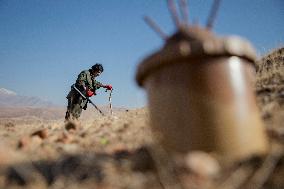
Hoshyar Ali bends over to inspect a landmine on a hillside in Halabja, Iraq, on November 20, 2025. He has been clearing landmines for over four decades, a task he began after the Iran-Iraq war when thousands of mines were planted along the border. Despite losing both legs and several family members to explosions, he continues to volunteer in mine removal. Locals call him “man of the mines,” and he is building a museum in his village to display defused explosives for future generations. Photo by Showan Sulaiman/Middle East Images/ABACAPRESS.COM

  •  
Iraqi Deminer Loses Legs Clearing Mines - Iraq

Iraqi Deminer Loses Legs Clearing Mines - Iraq

Four anti-personnel landmines are displayed on a wooden shelf in Hoshyar Ali's room, turned museum, in Halabja, Iraq, on November 20, 2025. He has been clearing landmines for over four decades, a task he began after the Iran-Iraq war when thousands of mines were planted along the border. Despite losing both legs and several family members to explosions, he continues to volunteer in mine removal. Locals call him “man of the mines,” and he is building a museum in his village to display defused explosives for future generations. Photo by Showan Sulaiman/Middle East Images/ABACAPRESS.COM

  •  
Iraqi Deminer Loses Legs Clearing Mines - Iraq

Iraqi Deminer Loses Legs Clearing Mines - Iraq

Four anti-personnel landmines are displayed on a wooden shelf in Hoshyar Ali's room, turned museum, in Halabja, Iraq, on November 20, 2025. He has been clearing landmines for over four decades, a task he began after the Iran-Iraq war when thousands of mines were planted along the border. Despite losing both legs and several family members to explosions, he continues to volunteer in mine removal. Locals call him “man of the mines,” and he is building a museum in his village to display defused explosives for future generations. Photo by Showan Sulaiman/Middle East Images/ABACAPRESS.COM

  •  
Iraqi Deminer Loses Legs Clearing Mines - Iraq

Iraqi Deminer Loses Legs Clearing Mines - Iraq

Hoshyar Ali holds a tool and a knife while sitting near landmines on a hillside in Halabja, Iraq, on November 20, 2025. He has been clearing landmines for over four decades, a task he began after the Iran-Iraq war when thousands of mines were planted along the border. Despite losing both legs and several family members to explosions, he continues to volunteer in mine removal. Locals call him “man of the mines,” and he is building a museum in his village to display defused explosives for future generations. Photo by Showan Sulaiman/Middle East Images/ABACAPRESS.COM

  •  
Iraqi Deminer Loses Legs Clearing Mines - Iraq

Iraqi Deminer Loses Legs Clearing Mines - Iraq

Hoshyar Ali uses a mine detector to find landmines on a hillside in Halabja, Iraq, on November 20, 2025. He has been clearing landmines for over four decades, a task he began after the Iran-Iraq war when thousands of mines were planted along the border. Despite losing both legs and several family members to explosions, he continues to volunteer in mine removal. Locals call him “man of the mines,” and he is building a museum in his village to display defused explosives for future generations. Photo by Showan Sulaiman/Middle East Images/ABACAPRESS.COM

  •  
Iraqi Deminer Loses Legs Clearing Mines - Iraq

Iraqi Deminer Loses Legs Clearing Mines - Iraq

Hoshyar Ali stands among landmines and a warning sign in Halabja, Iraq, on November 20, 2025. He has been clearing landmines for over four decades, a task he began after the Iran-Iraq war when thousands of mines were planted along the border. Despite losing both legs and several family members to explosions, he continues to volunteer in mine removal. Locals call him “man of the mines,” and he is building a museum in his village to display defused explosives for future generations. Photo by Showan Sulaiman/Middle East Images/ABACAPRESS.COM

  •  
Iraqi Deminer Loses Legs Clearing Mines - Iraq

Iraqi Deminer Loses Legs Clearing Mines - Iraq

A landmine uncovered by Hoshyar Ali remains partially buried in rocky soil in Halabja, Iraq, on November 20, 2025. He has been clearing landmines for over four decades, a task he began after the Iran-Iraq war when thousands of mines were planted along the border. Despite losing both legs and several family members to explosions, he continues to volunteer in mine removal. Locals call him “man of the mines,” and he is building a museum in his village to display defused explosives for future generations. Photo by Showan Sulaiman/Middle East Images/ABACAPRESS.COM

  •  
Iran Neyshabur Turquoise Mine

Iran Neyshabur Turquoise Mine

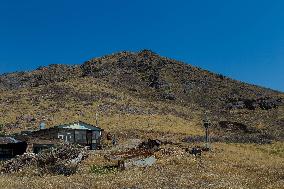
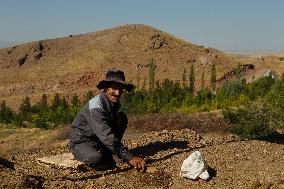
A view of the mountainous area around the Neyshabur turquoise mine, one of the world’s oldest and most famous sources of turquoise stones. The mine is located in northeastern Iran and has been producing turquoise for thousands of years. Photo by Maya/Middle East Images/ABACAPRESS.COM

  •  
Iran Neyshabur Turquoise Mine

Iran Neyshabur Turquoise Mine

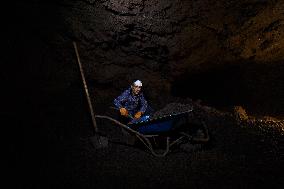
A miner in the Neishabur turquoise mine gets ready to move raw materials through the tunnels. These ancient mines, among the oldest in the world, have produced turquoise for thousands of years, prized for its use in jewelry and art. Photo by Maya/Middle East Images/ABACAPRESS.COM

  •  
Iran Neyshabur Turquoise Mine

Iran Neyshabur Turquoise Mine

A man in the outdoor areas surrounding the Neyshabur turquoise mine. The mine, located in Iran's Khorasan province, is famous for producing high-quality turquoise. Photo by Maya/Middle East Images/ABACAPRESS.COM

  •  
Iran Neyshabur Turquoise Mine

Iran Neyshabur Turquoise Mine

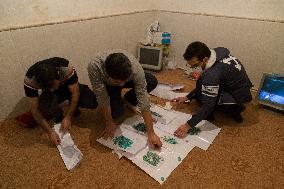
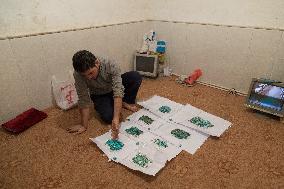
Workers sort and organize turquoise stones in a room in Nayshabur. Photo by Maya/Middle East Images/ABACAPRESS.COM

  •  
Iran Neyshabur Turquoise Mine

Iran Neyshabur Turquoise Mine

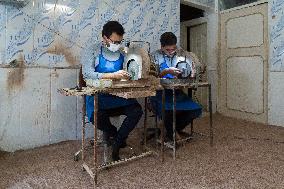
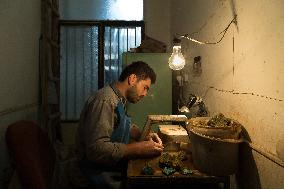
Craftsmen working on raw turquoise stone in a workshop in Nayshabur, one of the world's most renowned sources of turquoise. This process is a key step in transforming the stone into jewelry and ornamental pieces. Photo by Maya/Middle East Images/ABACAPRESS.COM

  •  
Iran Neyshabur Turquoise Mine

Iran Neyshabur Turquoise Mine

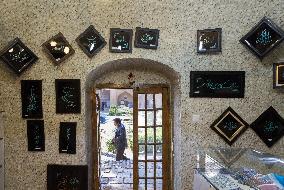
Turquoise-inlaid artwork decorates the walls of a gallery in Neyshabur, where the famous turquoise stones are also used in fine calligraphy pieces. Photo by Maya/Middle East Images/ABACAPRESS.COM

  •  
Iran Neyshabur Turquoise Mine

Iran Neyshabur Turquoise Mine

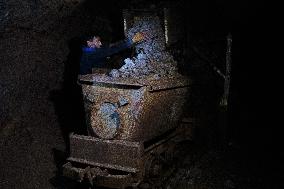
A worker loads extracted turquoise ore into a cart deep within the Neishabur turquoise mine, one of the world's oldest, known for producing high-quality turquoise. Photo by Maya/Middle East Images/ABACAPRESS.COM

  •  
Iran Neyshabur Turquoise Mine

Iran Neyshabur Turquoise Mine

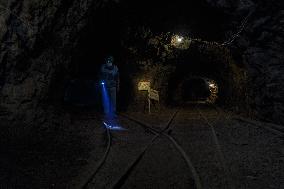
A miner walks through the dark tunnels of the Nayshabur Turquoise Mine, located near the city of Neyshabur in northeastern Iran. This ancient mine, dating back over 7,000 years, remains one of the world's oldest known sources of turquoise. Photo by Maya/Middle East Images/ABACAPRESS.COM

  •  
Iran Neyshabur Turquoise Mine

Iran Neyshabur Turquoise Mine

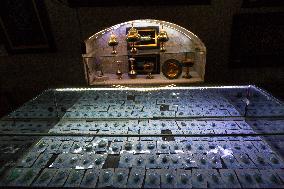
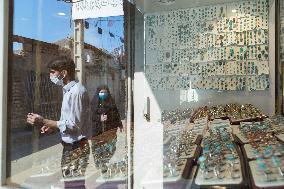
A display case in a shop in Neyshabur showcases a vast collection of turquoise stones, carefully cut and prepared for use in jewelry and artwork. Photo by Maya/Middle East Images/ABACAPRESS.COM

  •  
Iran Neyshabur Turquoise Mine

Iran Neyshabur Turquoise Mine

A man categorizes turquoise stones, preparing them for polishing and distribution. Photo by Maya/Middle East Images/ABACAPRESS.COM

  •  
Iran Neyshabur Turquoise Mine

Iran Neyshabur Turquoise Mine

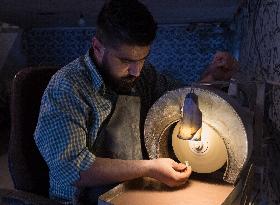
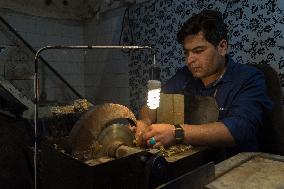
A craftsman carefully polishing a turquoise stone, shaping it for use in jewelry. The turquoise is extracted from the ancient Neishabur mines in Iran, which have been a source of this precious stone for thousands of years. Photo by Maya/Middle East Images/ABACAPRESS.COM

  •  
Iran Neyshabur Turquoise Mine

Iran Neyshabur Turquoise Mine

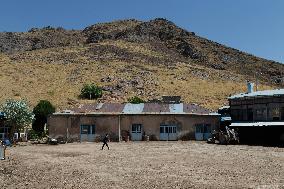
Yard of the Nayshabur Turquoise Mine, one of the oldest turquoise mines in the world, located near the city of Neyshabur in northeastern Iran. The mine has been a source of precious turquoise for thousands of years. Photo by Maya/Middle East Images/ABACAPRESS.COM

  •  
Iran Neyshabur Turquoise Mine

Iran Neyshabur Turquoise Mine

A craftsman carefully shapes a turquoise stone using a polishing machine, preparing it for use in fine jewelry and other decorative items. Photo by Maya/Middle East Images/ABACAPRESS.COM

  •  
Iran Neyshabur Turquoise Mine

Iran Neyshabur Turquoise Mine

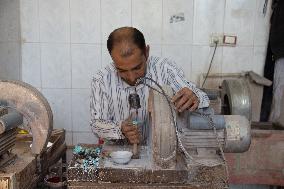
A craftsman carefully polishes a piece of turquoise in a workshop in Nayshabur, where the region's rich tradition of turquoise mining and jewelry-making continues. Photo by Maya/Middle East Images/ABACAPRESS.COM

  •  
Iran Neyshabur Turquoise Mine

Iran Neyshabur Turquoise Mine

A craftsman works on shaping raw turquoise stone in a workshop in Nayshabur, one of the world's most renowned sources of turquoise. This process is a key step in transforming the stone into jewelry and ornamental pieces. Photo by Maya/Middle East Images/ABACAPRESS.COM

  •  
Iran Neyshabur Turquoise Mine

Iran Neyshabur Turquoise Mine

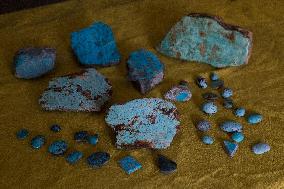
Raw and polished pieces of Nayshabur turquoise, known for its striking blue and green colors. Photo by Maya/Middle East Images/ABACAPRESS.COM

  •  
Iran Neyshabur Turquoise Mine

Iran Neyshabur Turquoise Mine

A shop in Nayshabur displays a wide variety of turquoise rings and jewelry, a reflection of the region's long-standing tradition of turquoise craftsmanship. Photo by Maya/Middle East Images/ABACAPRESS.COM

  •  
Iran Neyshabur Turquoise Mine

Iran Neyshabur Turquoise Mine

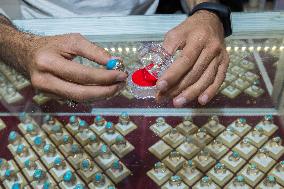
A display case in a turquoise jewelry shop showcases a turquoise ring, a signature stone from the Nayshabur region, known for its vibrant blue color. Photo by Maya/Middle East Images/ABACAPRESS.COM

  •  
Iran Neyshabur Turquoise Mine

Iran Neyshabur Turquoise Mine

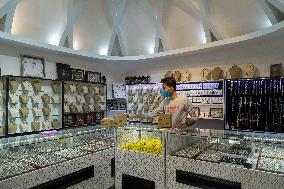
A turquoise jewelry shop near the Nayshabur Turquoise Mine displays a variety of handmade pieces made from the region's famous turquoise stones. Photo by Maya/Middle East Images/ABACAPRESS.COM

  •  
Iran Neyshabur Turquoise Mine

Iran Neyshabur Turquoise Mine

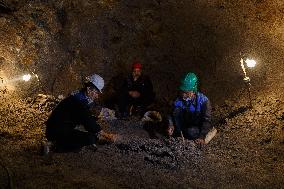
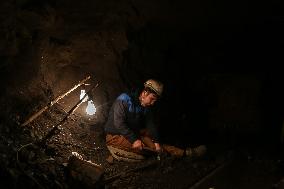
Workers excavating the turquoise-rich deposits in one of the extraction areas of the Neyshabur turquoise mine, which is among the oldest and most famous turquoise mines in the world. The mine has been in operation for over 7,000 years. Photo by Maya/Middle East Images/ABACAPRESS.COM

  •  
Iran Neyshabur Turquoise Mine

Iran Neyshabur Turquoise Mine

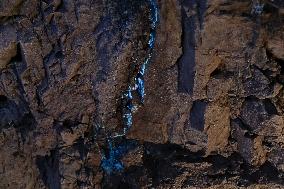
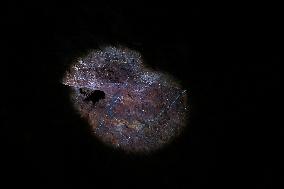
A turquoise vein running through the ancient rock inside the Neyshabur turquoise mine. This mine, one of the world's oldest, has been producing high-quality turquoise for over 7,000 years, with the precious stone being used for both jewelry and decorative items. Photo by Maya/Middle East Images/ABACAPRESS.COM

  •  
Iran Neyshabur Turquoise Mine

Iran Neyshabur Turquoise Mine

A vein of turquoise illuminated in the dark, deep within the ancient Neishabur mines in Iran. Photo by Maya/Middle East Images/ABACAPRESS.COM

  •  
Iran Neyshabur Turquoise Mine

Iran Neyshabur Turquoise Mine

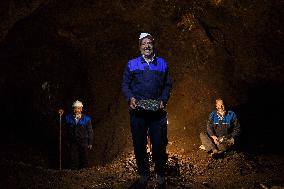
A miner holding a piece of raw turquoise in the Neishabur mines, one of the oldest and most renowned turquoise mines in the world. These mines have been in operation for thousands of years, yielding some of the finest turquoise of the world. Photo by Maya/Middle East Images/ABACAPRESS.COM

  •  
Iran Neyshabur Turquoise Mine

Iran Neyshabur Turquoise Mine

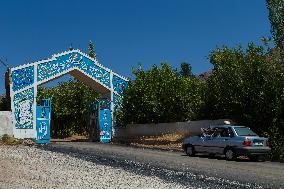
The entrance to the ancient turquoise mine in Neyshabur, one of the oldest in the world. Located in the village of Madan Aliya, about 20 kilometers northwest of Neyshabur and 145 kilometers west of Mashhad, this mine has been a source of turquoise for over 7,000 years. It is known for producing high-quality turquoise used in jewelry and artwork. Photo by Maya/Middle East Images/ABACAPRESS.COM

  •  
Iran Neyshabur Turquoise Mine

Iran Neyshabur Turquoise Mine

A miner in the Neyshabur turquoise mine. The mine, one of the oldest and most renowned turquoise mines in the world, has been in operation for over 7,000 years. Turquoise from this region is highly prized for its vibrant colors. Photo by Maya/Middle East Images/ABACAPRESS.COM

  •  
Anti-monuments placed as attempt to demand Justice - Mexico

Anti-monuments placed as attempt to demand Justice - Mexico

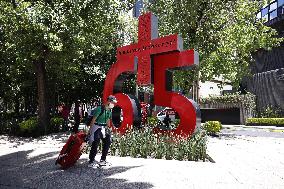
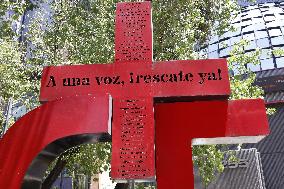
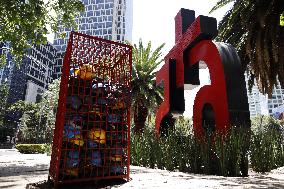
Anti-monument in memory of the 65 miners who died in the Pasta de Conchos Mine owned by Grupo Mexico in the state of Coahuila, demanding justice, compensation and the rescue of the bodies. 63 bodies are still inside the coal mine, waiting to be rescued. Anti-monument was placed Outside the Mexican Stock Exchange in Mexico City on June 19, 2021 in Mexico City, Mexico. Photo by Luis Barron/Eyepix/ABACAPRESS.COM

  •  
Anti-monuments placed as attempt to demand Justice - Mexico

Anti-monuments placed as attempt to demand Justice - Mexico

Anti-monument in memory of the 65 miners who died in the Pasta de Conchos Mine owned by Grupo Mexico in the state of Coahuila, demanding justice, compensation and the rescue of the bodies. 63 bodies are still inside the coal mine, waiting to be rescued. Anti-monument was placed Outside the Mexican Stock Exchange in Mexico City on June 19, 2021 in Mexico City, Mexico. Photo by Luis Barron/Eyepix/ABACAPRESS.COM

  •  
Anti-monuments placed as attempt to demand Justice - Mexico

Anti-monuments placed as attempt to demand Justice - Mexico

Anti-monument in memory of the 65 miners who died in the Pasta de Conchos Mine owned by Grupo Mexico in the state of Coahuila, demanding justice, compensation and the rescue of the bodies. 63 bodies are still inside the coal mine, waiting to be rescued. Anti-monument was placed Outside the Mexican Stock Exchange in Mexico City on June 19, 2021 in Mexico City, Mexico. Photo by Luis Barron/Eyepix/ABACAPRESS.COM

  • Main
  • Top
  • Editorial
  • Creative
  • About Us
  • About ILG
  • Terms of use
  • Company
  • BEHIND
  • Price List
  • Single Plan
  • Monthly Plan
  • Services
  • Shooting
  • Rights Clearance
  • Support
  • FAQ
  • How To Buy
  • Contact Us
  • Become a Partner

© KYODO NEWS IMAGES INC

All Rights Reserved.

  • Editorial
  • Olympics
  • News
  • Sports
  • Japan
  • Tech
  • Royal
  • Disaster
  • NorthKorea
  • Old Japan
  • SNS
  • Creative
  • Food
  • Japan
  • Landscape
  • Animal
  • Popular
  • #Ukraine
  • #Russia
  • #coronavirus
  • #N. Korea
  • #China
  • #Thailand
  • #Ukraine
  • #Russia
  • #coronavirus
  • #N. Korea
  • #China
  • #Thailand
  • Food
  • Japan
  • Landscape
  • Animal
  • Olympics
  • News
  • Sports
  • Japan
  • Tech
  • Royal
  • Disaster
  • NorthKorea
  • Old Japan
  • SNS